DMEM Low Glucose (1 g/L)低糖DMEM,with Stable Glutamine, with Sodium Pyruvate含稳定谷氨酰胺
详细描述
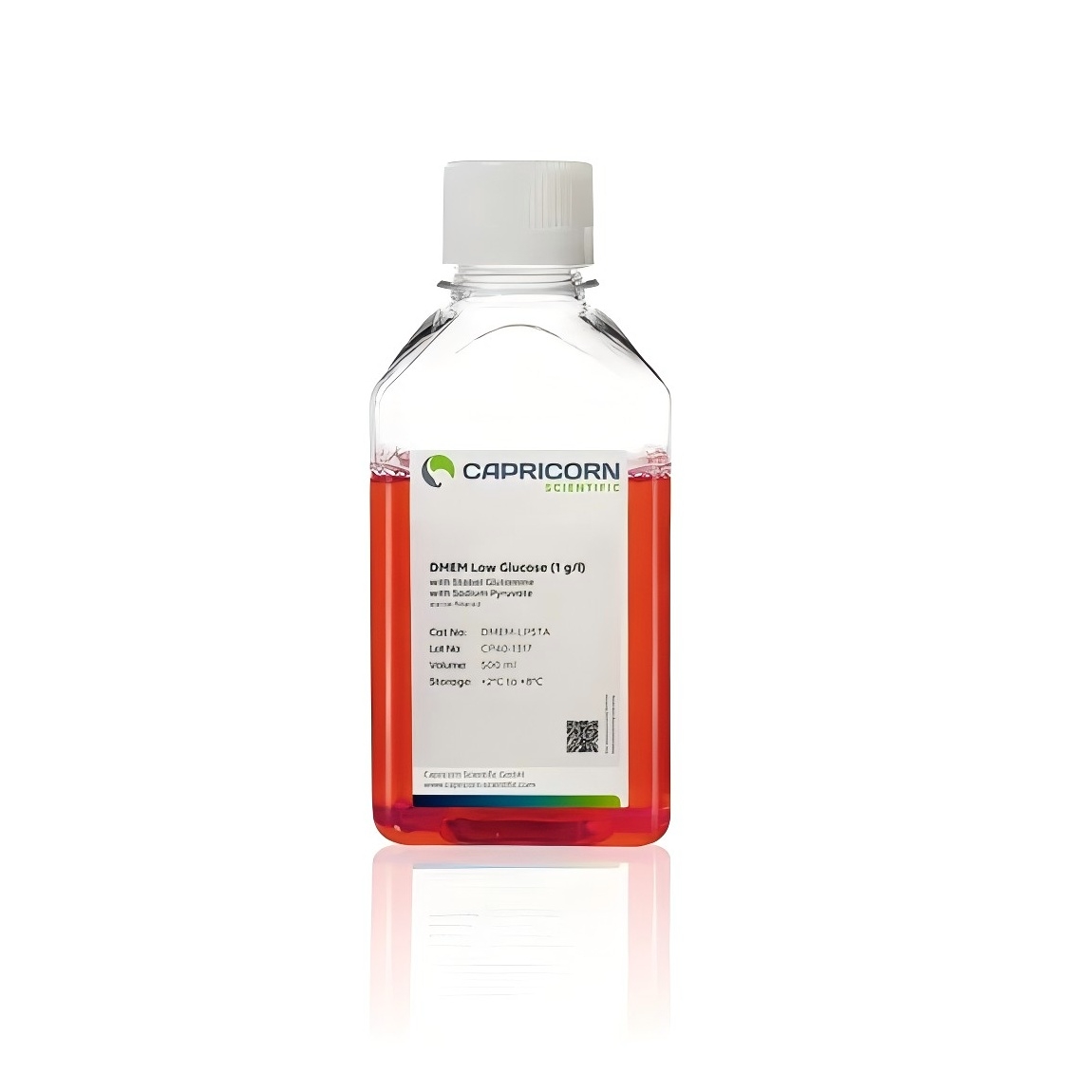
DMEM低糖培养基(Dulbecco's Modified Eagle Medium)是一种标准的细胞培养基,支持多种细胞类型的生长,其丰富的配方种类可满足众多应用需求。
Cat-No:DMEM-LPSTA
Volume:500 ml
Storage:+2°C to +8°C
Sterility:Sterile-filtered
描述
DMEM低糖培养基(Dulbecco's Modified Eagle Medium)是一种标准的液体生长培养基,可为所有细胞培养应用提供基础营养物质。
该配方的DMEM添加了稳定谷氨酰胺和丙酮酸钠。稳定谷氨酰胺(又称L-丙氨酰-L-谷氨酰胺)是L-谷氨酰胺的直接替代品,具有更高的稳定性。
我们生产的所有高品质细胞培养基均依据原始发表配方或为确保持续性能与培养基稳定性所必需的改良配方制造。DMEM支持多种哺乳动物细胞的生长,可用于培养原代成纤维细胞、神经元、胶质细胞、HUVEC和平滑肌细胞,以及HeLa、HEK 293、Cos-7和PC-12等细胞系。原始配方含1.0 g/L葡萄糖,用于培养小鼠胚胎细胞,此后经过多次改良。
Description
DMEM Low Glucose (Dulbecco's Modified Eagle Medium) is a standard liquid growth medium that provides basic nutrients for all cell culture applications.
This formulation of DMEM is supplemented with Stable Glutamine and with Sodium Pyruvate. Stable glutamine (also known as L-Alanyl-L-Glutamine) is a direct substitute for L-glutamine and has an increased stability.
Each of our high-quality cell culture media is manufactured according to the originally published formula or modifications essential to the consistent performance and stability of the culture medium. DMEM supports the growth of various mammalian cells. It can be used to cultivate primary fibroblasts, neurons, glial cells, HUVECs, and smooth muscle cells, as well as cell lines such as HeLa, HEK 293, Cos-7, and PC-12. The original formulation contained 1.0 g/L of glucose and was used to culture embryonic mouse cells. Since then, it has been modified in several ways.
引用文献:
2026年Nature:Multi-platform profiling reveals host-and cell-type-specific pseudorabies virus gene expression
supplemented with 10% fetal bovine serum (FBS; Capricorn Scientific). C6 cells were grown in …
association with living cells. Particularly, amino-acid-derived polyzwitterions feature specificity to …
Design of tuneable, biocompatible anionic polymers by l-norvaline amino acid post-polymerisation modification of pentafluorophenyl acrylate copolymers
are attracting increasing research interest. The hydrophilicity–hydrophobicity ratio of …

